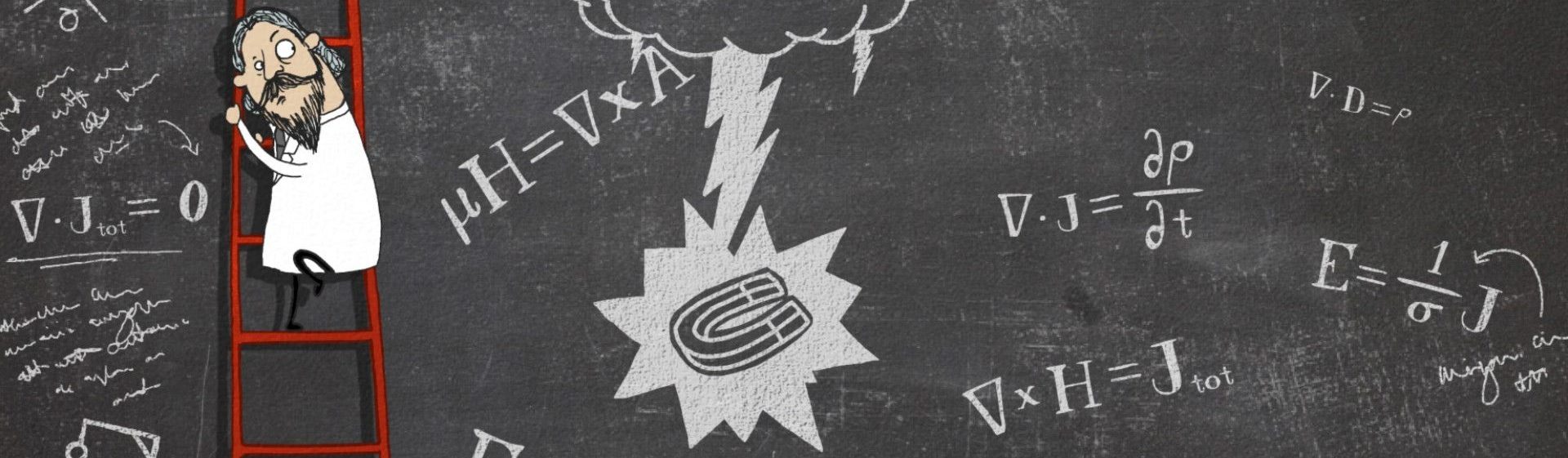
We have all heard of Albert Einstein’s famous equation E = mc2 . This equation relates how energy and matter are basically two sides of the same coin. History has taught us the measure of this equation in World War II where atomic bombs demonstrated how a tiny amount of matter could equate to an enormous amount of energy.
Now, scientists may have found that we could flip this energy-mass equivalence over its head to create matter from energy. This is what the team at Brookhaven National Laboratory’s Relativistic Heavy Ion Collider (RHIC) have reported in their most recent work.
For starters, the amount of matter created is only a tiny amount accounting for the collective mass of a few fundamental particles such as electrons and their positive cousins positrons. Nevertheless, it is a big step in the grander picture of physics where we have seen the first evidence of reverse engineering a significant equivalence principle of the universe.
This recent discovery has its fair share of history. Going back all the way to 1934, American physicists Gregory Breit and John Wheeler theorized on the possibilities of creating mater by smashing photons (or light particles) together in a process called the Breit-Wheeler process.

The two physicists themselves thought a physical realization of their theory would be impossible given the complexity of the experiment. But here we are in 2021 facing what might be the first empirical evidence of the Breit-Wheeler process. So, how did the team at Brookhaven Laboratory make this happen?
It is all thanks to the second-half of the lab’s namesake – the RHIC.
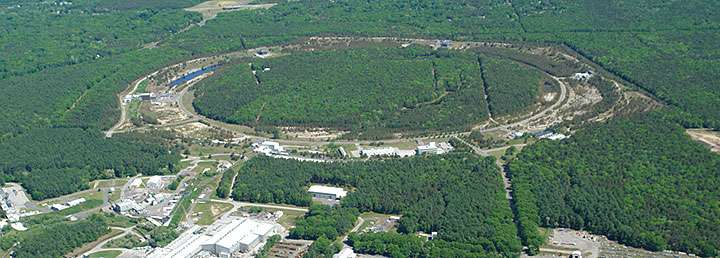
The RHIC is one among many particle accelerators in the world. These facilities help accelerate elementary particles like electrons, protons, and photons to speeds close to the speed of light or extremely high energies. To have this happen, the particles require an isolated, “trafficless”, environment within a vacuum chamber held within a really long pipeline. Detectors stationed within the accelerator can then record what happens when the accelerated particles collide.
Even before the RHIC, the Stanford Linear Accelerator in 1997 demonstrated one of the first examples of creating matter from light. There, colliding electrons generated photons which then after multiple collisions themselves created electrons and positrons. The results were debatable as doubts were raised on the genuineness of the photons used to generate matter. Ideally, the Breit-Wheeler process expected the creation of matter directly from photons alone, and not through an indirect collision process as observed at Stanford. Thus, the elusive search continued.
In 2014, a team at Imperial College London proposed an innovative means to make this happen. It involved shooting a beam of electrons into a slab of gold to create high-energy but “genuine” photons. These photons could then be smashed again to create subatomic matter. While the experiment began in 2018, success has yet to occur.
And that’s where the Brookhaven team comes into the picture. They believe they have already made this happen at their facility. Instead of using an electron beam, the Brookhaven experiment accelerated heavy gold ions, atoms of gold stripped of all their electrons, to 99.99% the speed of light inside the RHIC. As a result of this acceleration, the gold ions generated a cloud of photons that continued alongside them within the accelerator.

When the two ions passed close to one another, these photons collided resulting in the generation of electrons and positrons.
But scientific experiments have their own share of paparazzi in the form of disagreements and differing interpretations.
Much like the Stanford team, the results demonstrated by the Brookhaven team are not convincing enough for some scientists who believe that the photons produced here aren’t necessarily real. Rather, they deem them “virtual” photons as opposed to standard photons.
What are virtual particles? Well, that is a much bigger discussion we do not have time for today. For now, take virtual particles as a fleeting form of matter that pops in and out of existence.
The Brookhaven team have countered their doubters stating that they have proof about the “realness” of the photons. It all comes down to measuring the angles between the electrons and positrons generated in the experiment post-photon collision. These angles can reveal how real or virtual the photons utilized in their experiment are.
Its kind of similar to deducing the origins and nature behind what caused billiard balls to scatter on a pool table (could be another billiard ball or any other object), after they have been scattered. The Brookhaven did this very measurement for more than 6,000 electron-positron pairs, finding the results to be consistent with what would be expected of collisions between real photons.
Despite this, there has been a guarded response to the results from the scientific community. Debates will continue but these results have certainly sent us further along our goal to capture the Breit-Wheeler process. In science, there is always something to learn on our path to truth. The Brookhaven experiment is the very same. While disagreements linger, the experiment is essentially a bid to recreate the first few moments at the birth of our universe when the earliest electrons and positrons came to existence in the cosmos.
The coming years will be crucial in fleshing out our understanding of the experiment’s results and truly strengthen its argument that we have finally created matter from light.

 The Procrastinating Scientist
One thought on “Creating Matter from Light!”